
What is Canoe Polo?
Speed, precision and team spirit on the water: Two teams of five players compete in kayaks in a fast-paced, tactical battle for every goal.
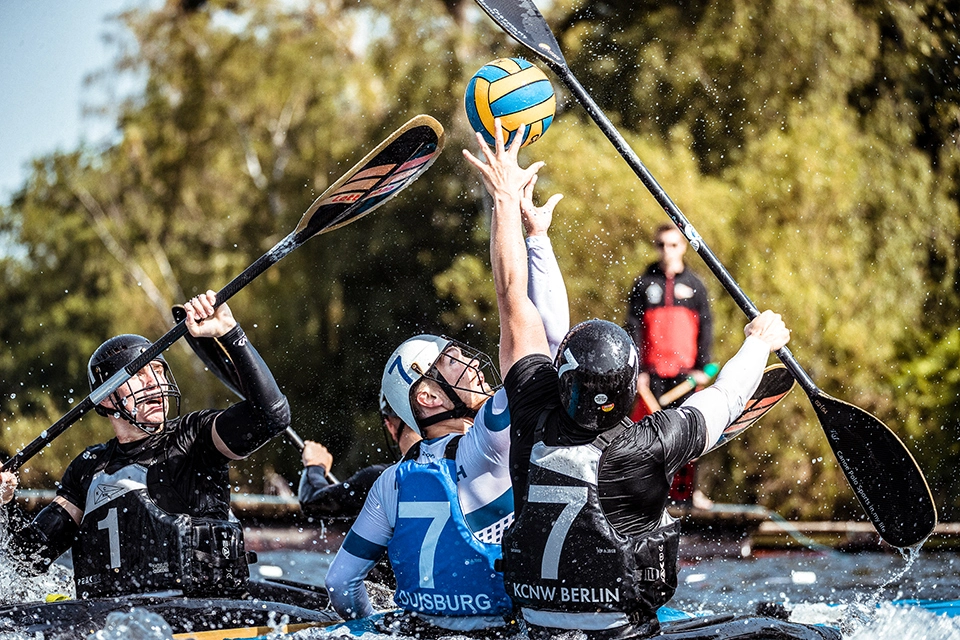
THE BASIC IDEA
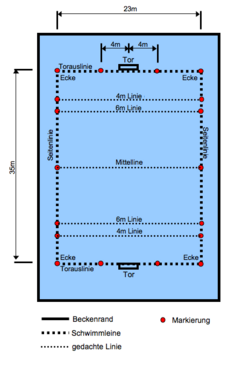
PLAYING AREA & GOALS
EQUIPMENT
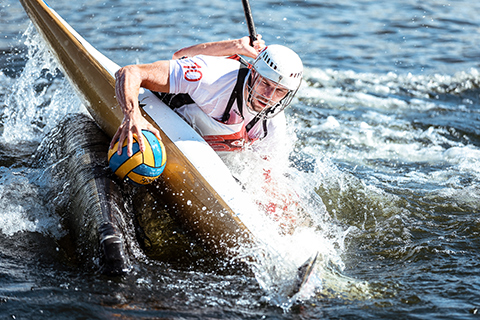
Kayak
Short & agile, with bumpers at the front & rear
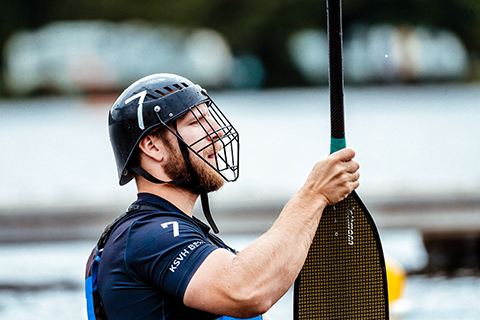
Paddle
For propulsion, ball control & defence
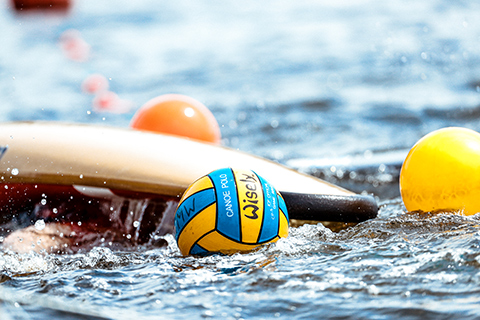
Ball
Easy-to-handle water polo ball for throwing & passing
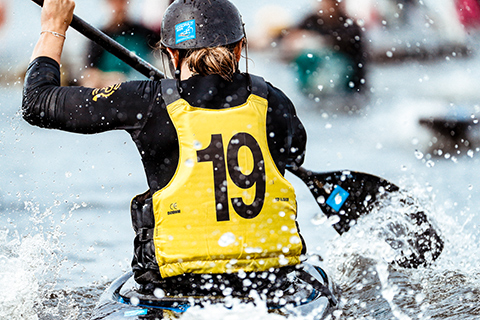
Helmet & Buoyancy Vest
Required: helmet with face guard and buoyancy vest
RULES AT A GLANCE
What makes Canoe Polo special
Canoe polo combines elements of handball, basketball and water polo – all played in a kayak. The game is played five against five, with up to three substitutes per team. Substitutions can be made at any time.
The ball can be played with either the hand or the paddle. Players may even capsize during physical challenges, while the goalkeeper uses their paddle to defend the goal suspended high above the water. A player in possession of the ball may be pushed on the shoulder by an opponent.
Players can be substituted on and off at any time during the match without stopping play – keeping the pace even higher.
Positions
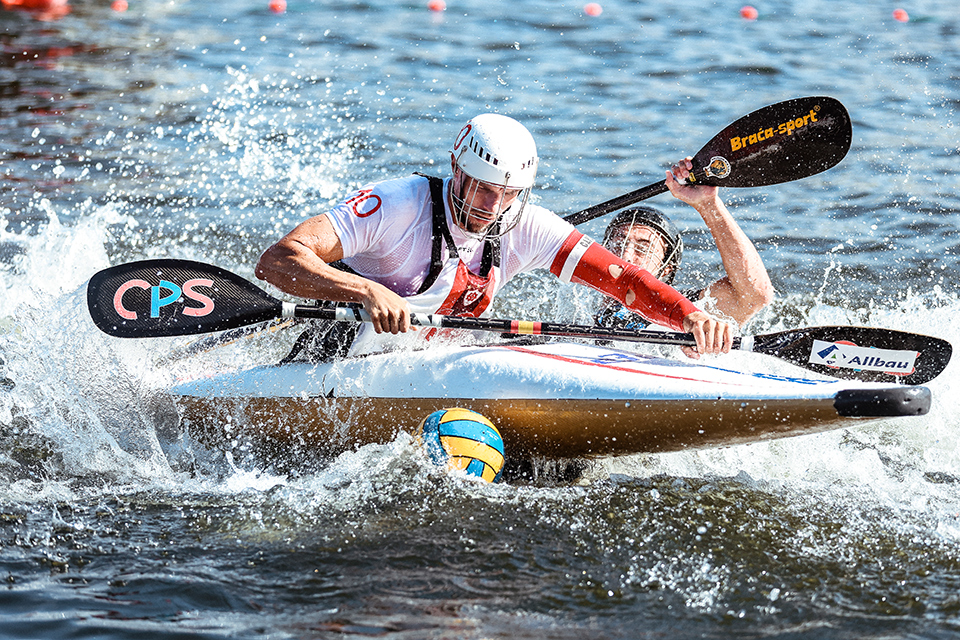
Outfield Player
All five players take on attacking and defensive roles depending on the situation. Quick transitions constantly create new game situations.
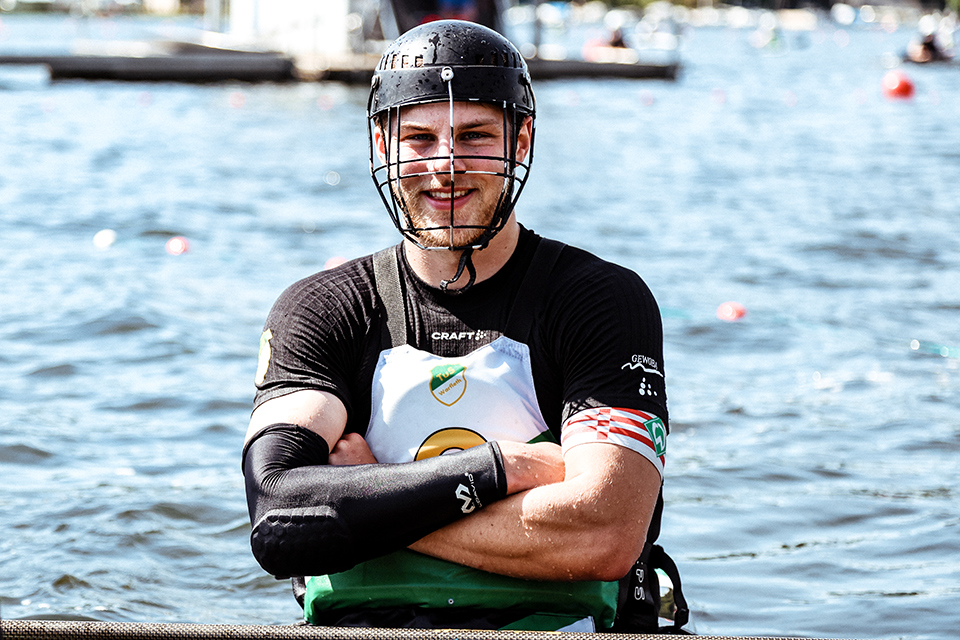
Goalkeeper
One of the five players takes on the role of goalkeeper, using their paddle to defend the goal suspended two metres above the water. When their team gains possession, the goalkeeper can rejoin the attack.